Bangus in Perspective: An interview with a Dagupeno Masterchef
 Inihaw na bangus – a very tangy and delicious dish that anyone can prepare easily. ©pinoysrecipesonline
What is the promise of Dagupan? What are people looking for in this place? What are they selling that brings people across the oceans, the mountains, and the parched wasteland?
Sure. You can hear karaoke belters on the afternoon; try the famous pigar-pigar; and visit a streak of crowded pubs along downtown dancing to Katy Perry’s Fireworks. And then there’s laughter. It’s always possible.

But that’s not why one come here, is it?
By the time a road trip is drawing to a close, reluctantly bidding goodbye to Alaminos’ Hundred Islands or Calasiao’s golden rice cakes called puto, one that surely completes the last dregs of a savory experience in Pangasinan is by eating bangus – dinaing, pinaksiw, sinigang, inihaw or whatever preparation it goes through; patrons never get cloyed of its mighty flavor.
With the city’s celebration of its annual festivity, Bangus Festival, it promised to jumpstart another decade of feasting on bountiful seafood harvest and earmarking its grandeur as it goes bigger, better, and international. Bangusine, which stands for International Bangus Cuisine Showdown, is one of its anticipated highlight events where foreign students prepare dishes out of bangusaccording to their culinary customs.
A past master to these kinds of competitions, Melchor Corpuz is famed for consistently bagging the championship title. Exposed to the world of food, he creates something that’s surprisingly characteristic yet appetizing.


Cupcakes are the new cakes. Everywhere you turn to, pastry chefs are on vogue of this budding venture. And Melchor saw the same exciting opportunity in the cupcake business. With his love affair for all things luscious and sweet, he now owns a cupcake business operating in Jeddah.
Focus Weekly, on a chase of the self- instructed chef, found him via Facebook on a casual dining restaurant in Saudi Arabia (where he works as a Chef de Partie.)
FOCUS: Was cooking an initial passion of yours or you develop it while growing up? What program/s did you take to maximize your culinary prowess?
MELCHOR: When I was young, I always wanted to be a doctor. I know most kids do. However, growing up in a restaurant and being exposed to cooking and restaurant operations changed that. I started my passion for cooking at a very young age. I’m greatly influenced by my parents who themselves are great cooks. Growing up, my guardian wants me to become a nurse but with strong will, I managed to convince her that I wanted to become a Chef or a Restaurateur. So I took up Hotel and Restaurant Management.
F: Who were your inspirations? And what made you pursue this career?
M: I would say my parents and relatives. Most of my relatives are great cooks. When I was in college, I was given the privilege to have a six-month apprenticeship in Raffles Hotel, one of the grandest hotels in Singapore. I had a great time over there. Working in a nice environment with great chefs and practicing culinary arts at its finest; I don’t want to leave any longer. But then I need to come back and finish my study. While pursuing my college degree, my passion for cooking fired up. I joined culinary competitions. I watched Youtube videos, and did some research and a lot of studying.
F: What competition has put your name in the culinary walk of fame? What was the winning recipe?
M: My greatest feats would be the Bangus Festival Competitions. My first winning recipe is the Fettuccini with Creamy Bangus Sauce, and then followed by my Bangus Rolls which have been featured in one of GMA Kapuso Shows called 100% Pinoy.
F: When joining competitions, what preparations do you make?
M: I don’t do kitchen test simply because I don’t have the financial means to do so. What I do is, I go online and watch a lot of videos. One example would be my lechon making experience. I never tried doing lechon before. I watched a lot of videos. I talked to some chefs that I admire via Twitter and some lechoneros in the city.
F: Now that you’ve finally achieved your reverie as a professional chef (who now works in a casual dining restaurant in Saudi Arabia), what comes next?
M: I’m currently working as a Chef De Partie of P.F. Chang’s China Bistro, the pioneer store here in the Kingdom. Within a short span of time, we already have been regarded as one of the top ten highest grossing restaurants worldwide. I’m currently on training to become a sous chef. Hopefully after six months, I will become one. But I won’t stop until I become an Executive Chef.
F: To start-up food entrepreneurs out there, what advice would you like to tell them?
M: When you fail to prepare, prepare to fail. Plan. Do some research. Study, study, study. Ask people who are already in the business.
Corpuz’s connection to his roots is seen in his food, acquainting foreign tongues with Filipino flavors – whether it’s lechon kawali for a crispy pork fix, he can make it happen. Here’s a list of his winning recipes on last year’s 101 Ways to Cook Seafood, firstly revealed in Focus.
East Meets West
A delectable Shrimp soup with malunggay and squash served with Shrimp Cannelloni
A delectable Shrimp soup with malunggay and squash served with Shrimp Cannelloni
QUANTITY | MEASUREMENT | INGREDIENT |
100 | Grams | Fresh egg pasta |
5 | Tablespoons | Vegetable oil |
100 | Grams | White onion, minced |
50 | Grams | Garlic, minced |
250 | Grams | Shrimp, minced |
2 | Pieces | Bouillon cubes |
1 | Can | Evaporated milk |
1 | Pack | All Purpose Cream |
100 | Grams | Quickmelt cheese, cubed |
½ | Cup | Malunggay leaves, blanched |
1 | Cup | Squash, sliced, cooked |
1 | Tablespoon | Thyme |
1 | Tablespoon | Basil |
1 | Sachet | Seasoning |
1 | Tablespoon | All Purpose Cream |
1 | Tablespoon | |
1 | Cup | Quickmelt cheese, grated |
½ | Cup | Crispy shoestring potatoes |
1 | Pinch each | Salt and Pepper |
Procedures:
- Using a pasta maker, make the cannelloni. Cook and set aside.
- Sauté the onion and garlic until translucent.
- Add the shrimp and sauté until half cook; take out some of the meat and set aside.
- Add the bouillon cubes and mix thoroughly.
- Add the milk and cream and let it boil.
- Add the cheese and lower the heat.
- Divide the soup mixture into two batches.
- On the first batch, add malunggay leaves and puree.
- On the second batch, add the squash; this will also be pureed.
- Put the processed soup into a separate pan and season with salt and pepper to taste.
- Let it simmer and add herbs.
- To make the shrimp cannelloni, sauté the shrimp that was set aside and season with seasoning. Add a little bit of all purpose cream and grated cheese to achieve thickness.
- Lay flat the cooked fresh egg pasta and spoon a shrimp mixture on one side and roll.
- Put the cannelloni in a serving bowl and top with the two pureed soup.
- Garnish with crispy shoestring potatoes.

Shrimp Progression
A platter of shrimp appetizer that consists of: 1) reconstructed shrimp soup; 2) grilled bacon-wrapped shrimp with mango oulis; 3) arabian nights shrimp in crispy potato skin; and 4) crispy shrimp with garlic aioli.
QUANTITY | MEASUREMENT | INGREDIENT |
250 | Grams | Shrimp, peeled, deveined with tails intact |
100 | Grams | Left Over Shrimp Soup |
1 | Tablespoon | Gelatin, bloomed |
100 | Grams | Bacon |
¼ | Cup | Barbecue Sauce |
1 | Tablespoon | Mango Puree |
½ | Cup | Peach Coulis |
1 | Tablespoon | Vegetable Oil |
1 | Tablespoon | Garlic, minced |
2 | Tablespoons | Onion, minced |
2 | Tablespoons | Tomato Sauce |
1 | Tablespoon | Cumin |
1 | Tablespoon | Turmeric |
1 | Tablespoon | All Purpose Cream |
2 | Tablespoon | Quickmelt cheese |
10 | Pieces | Crispy potato skin |
2 | Tablespoons | Cornstarch |
2 | Teaspoons | Garlic, minced |
¼ | Cup | Mayonnaise |
1 | Pinch each | Salt and pepper |
Procedures:

- Simmer the leftover soup and add the bloomed gelatin. Mix thoroughly. Puree the soup.
- Prepare a thin kitchen hose; submerge in iced-water and a kitchen syringe.
- Using a kitchen syringe, pass the soup into the hose and let it sit on the ice-water.
- When set, use the syringe to push out the jelly out of the hose. Set aside.
- Wrap some of the shrimp with bacon. Set aside.
- For the marinade, mix barbecue sauce and mango puree.
- Marinate the bacon-wrapped shrimp and grill when already needed.
- Sauté the garlic and onion.
- Add the shrimp and heat through.
- Add the tomato sauce and season with cumin and turmeric powder.
- Add all purpose cream and cheese. Serve in crispy potato skin.
- Season cornstarch with salt and pepper and dredge the remaining shrimp. Deep-fry until cooked.
- To make the garlic aioli, mix the minced garlic and mayonnaise. Season with salt and pepper and a little bit of sugar.
- To serve, arrange in a platter the reconstructed soup, the bacon-wrapped shrimp served with peach coulis, the Arabian nights Shrimp and the deep fried shrimp with garlic Aioli.


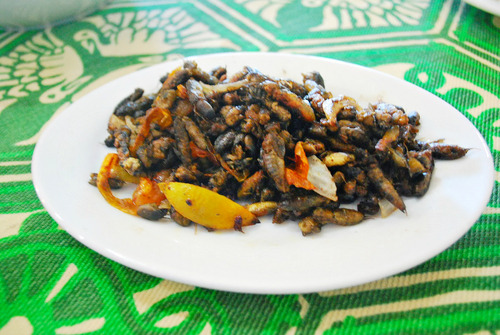


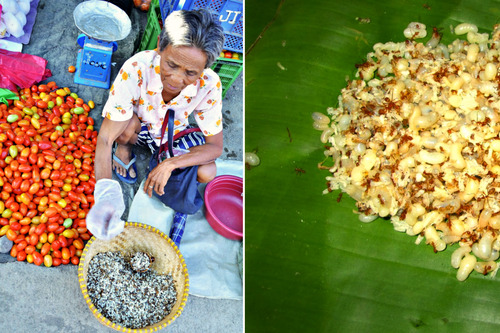 Itlog ti abuos (fruit-tree ant eggs) is a popular delicacy in the northern parts of Luzon. Often sautéed in garlic and onions, this native dish, which looks a lot like roasted legumes, is a tasty treat that’s also claimed to be an effective aphrodisiac.
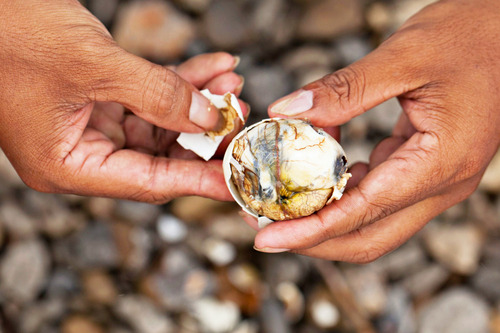 Though considered an object of culinary fascination around the world and common eats among many Filipinos, there are still those who have yet to pluck up the courage to try balut because then, it is no beauty queen. Balut is a fertilized duck egg, either 16 or 18 days old, which has been boiled and is eaten with salt or vinegar, has revolted even the most daring foodies with its carnal textures, earning it lofty rankings on many a “most disgusting/strange/terrifying food” list.
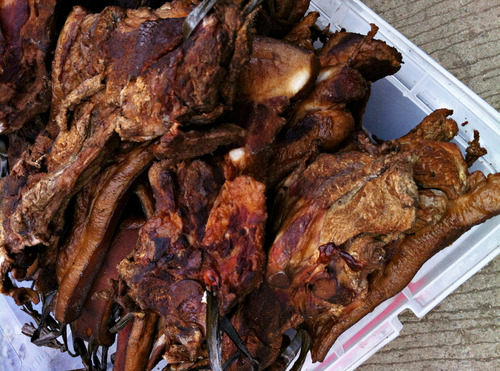 Etag is an Igorot dish that is preserved small slab of meat (esp. pork) made through salt-treating, sun-drying or smoking. is salted pork that is kept underground in earthenware jars to age. It is not a dish in itself, as it is most often used as an ingredient in other viands, but it adds a very distinct flavor to meat or vegetable dishes. Its color is partly dark brown with noticeable whitish yellow fat color.
 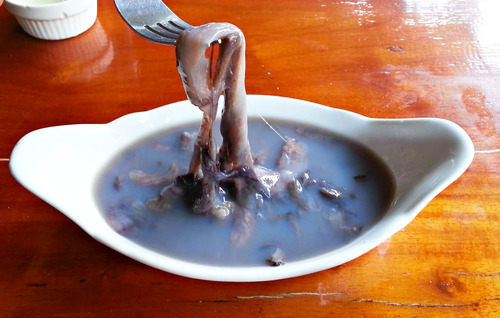 "Tommy, look!" were the words uttered by a foreign visitor when he and his companion chanced upon locals in Palawan eating raw woodworms with vinegar. Since then, the woodworms which usually hide in the crevices of the branches of the mangrove tree, known as bakawan have been called as tamilok.
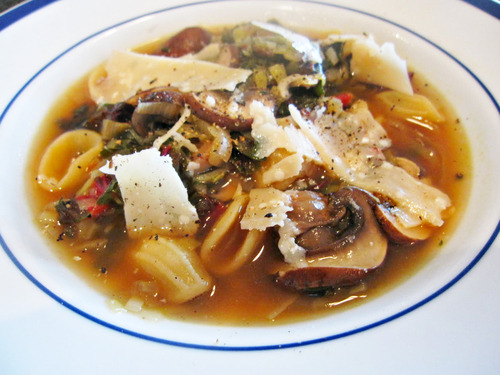
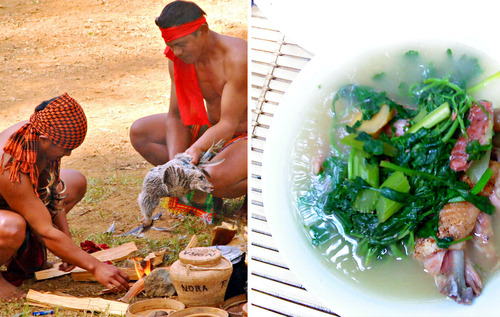 Pinikpikan is a controversial yet famous native dish from the highlands of Cordillera. For some, it is an extreme eating, but looking closely at the end product, it looks pretty simple and plain delicious, near to tinola. The flavors of the dish come from the coagulated blood, the burned feathers and skin, and one special ingredient called Etag, which is a cured and smoked meat, aged and kept underground in earthen jars.